

GROUP COMPANIES


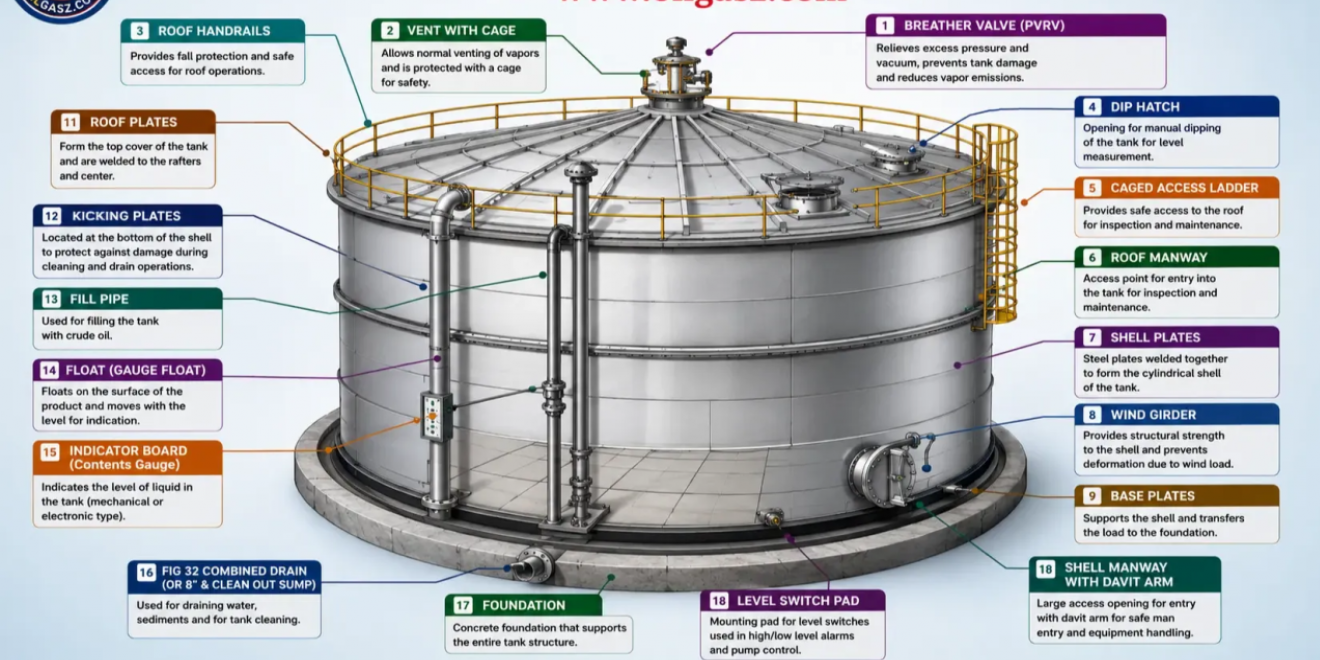
Storage Tanks For Refineries
The tank of a particular liquid is selected according to the flash point of that substance. Usually, there are tanks with fixed ceilings and tanks with floating ceilings in refineries and especially for liquid fuels.
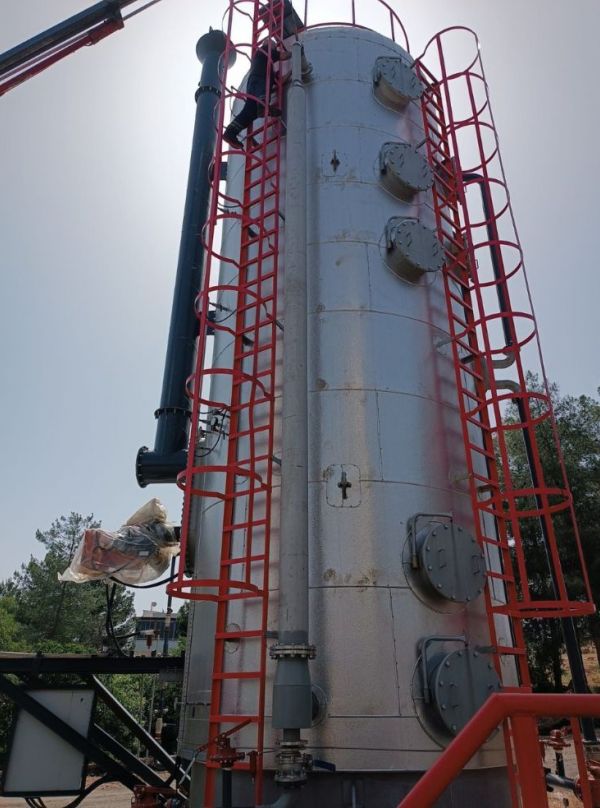
· Fixed-roofed tanks have a very high flash point. There are shapes such as cone roofs, dome roofs and umbrella roofs. It is insulated to prevent the clogging of some materials that receive heat from the steam coils in the tank.
Dome-roofed tanks are used for tanks with a storage pressure slightly higher than that of the atmosphere, for example, used in slop oils.
Floating roof tanks are generally external floating roof tanks and are divided into internal surface roofed types.
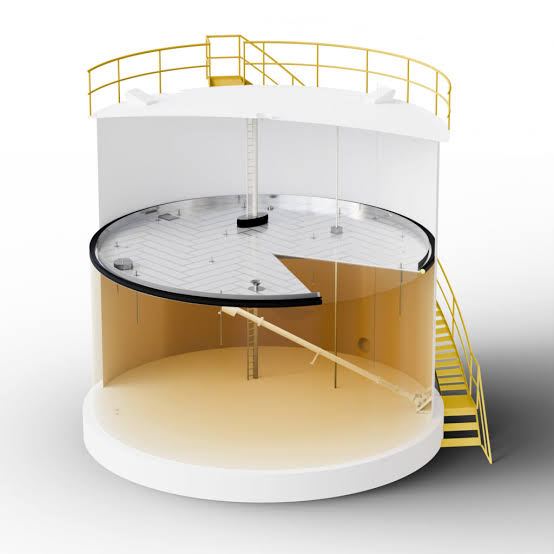
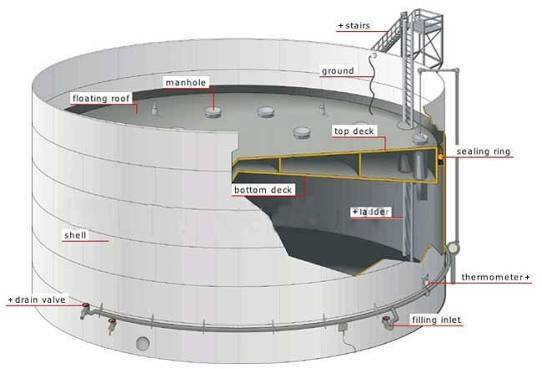
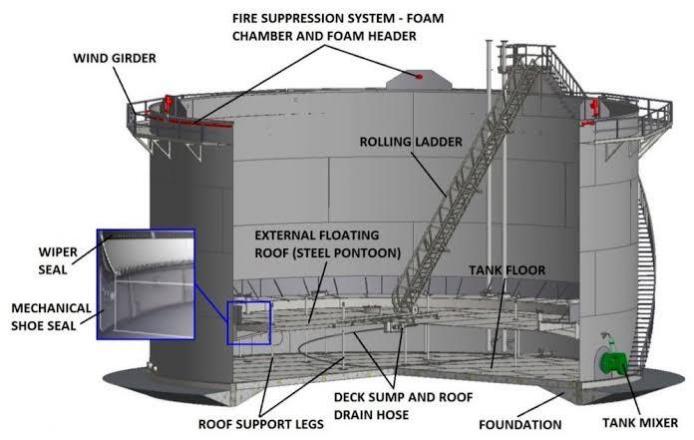
Floating roof tanks are used for gasoline with low flash point liquids such as ethanol. These tanks are nothing more than cone-roofed tanks with a floating roof that moves up and down with the level of liquid in them. This floating roof traps steam from low-flashpoint fuels. Floating roofs are supported by legs or cables on which they sit. One of the best types found in mining areas are open-roofed type tanks, usually for storing ore slurries.
These are the simplest and shortest-lasting storage tanks to produce. As for fuels, because their flash points are very low, LPG, hydrogen, hexane, nitrogen, oxygen, etc. tanks for storage are usually spherical.

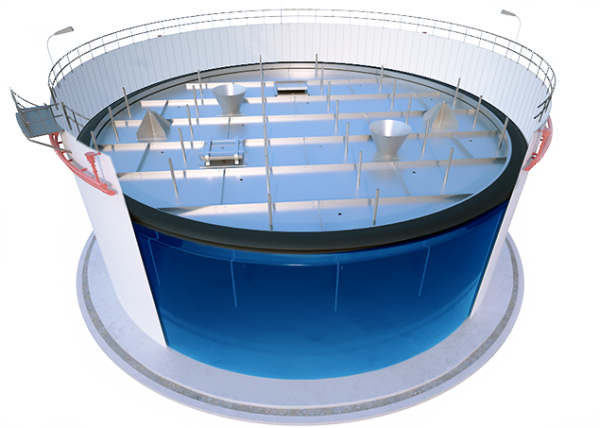
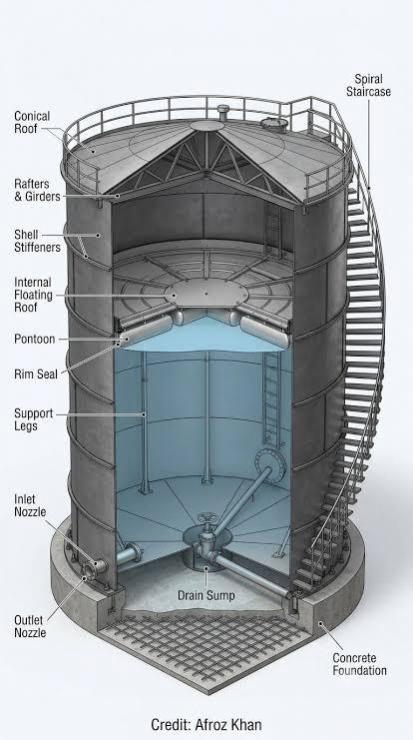
Storage Tanks Building Materials
Steel and concrete remain one of the most popular options for tanks, while glass-reinforced plastic, thermoplastic and polyethylene tanks are growing in popularity.
They offer lower construction costs and higher chemical resistance, especially for the storage of special chemicals. Several relevant standards give recommendations on wall thickness, quality control procedures, and tests for various controllers.
Storage tanks are sealed storage vehicles for substances to be stored according to the standards.
The requirements for storage tanks are different according to the material properties of the materials to be stored.
In addition, storage tanks should be designed taking into account the processes before and after storage systems
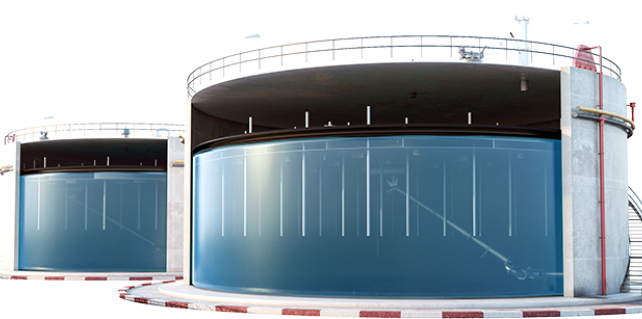
Storage tanks play a critical role in the oil and gas industry by safely storing crude oil, refined products, gases, water, and chemicals throughout production, processing, and distribution operations.
𝐖𝐡𝐲 𝐓𝐚𝐧𝐤 𝐒𝐞𝐥𝐞𝐜𝐭𝐢𝐨𝐧 𝐌𝐚𝐭𝐭𝐞𝐫𝐬 ?
🔹Choosing the right storage
tank depends on :
🔹Product type (liquid, gas,
corrosive, volatile)
🔹Operating pressure and
temperature
🔹Storage capacity requirements
🔹Safety and environmental
considerations
🔹Material compatibility and
maintenance needs
With decades of knowledge and experience working in the oil fields, Superior Tank provides the industry’s premier storage solution for crude oil and other petrochemicals.
Our history includes extensive experience with both bolted steel tanks and welded steel tanks and we are one of the only tank manufacturers qualified to produce bolted steel tanks featuring the prestigious API 12B Monogram.

PRODUCTS & SECTORS
METROPET COMPANY
STORAGE TANKS & FREE ZONE
Founded in 1995, METROPET Imp. ihr. inş. ltd. şti
PAYED CAPITAL : 250.000.000 MILLION TURKISH LIRA
TURNOVER : 2 BILLION USD
İt has completed its institutionalization process by reaching many points in the country and abroad
SYRIA
IRAQ
TURKEY
DUBAI
SAUDI ARABIA
KUWAIT
TANZANIA
EGYPT
YEMEN
Pursuant to the Decision No. 2011/2033 on the Import, Export and Transit of Crude Oil and Some Petroleum Products by Road or Railway; T.R. We are bringing bitumen with the permission we have obtained from the Ministry of Commerce for the "Import, export and transit of asphalt type goods from Iraq by road" in subheading 2713.20.
Metropet, with its experienced and expert staff, effectively uses the existing infrastructure of our country and provides important services in presenting oil to the world markets and meeting the fuel product needs of the region.
Our Mission
To add value to its customers and markets with its competitive solutions with its flexible and dynamic structure, developing by operating in the energy sector, especially oil and petroleum products logistics and trade, in the international arena and especially in nearby markets.
Our vision
To be a preferred and trusted global company by constantly improving the quality of products and services that respect the environment and life values in the areas in which it operates, by providing the highest level of satisfaction to its social stakeholders.

A storage tank is a tank designed for storing liquid substances. Although it is mainly used in the petroleum industry (petrol tanks) , it can also be used in other industries, for example, it is used in the food industry (oil storage tanks) and the fertilizer industry. A storage container is a container that holds liquids, compressed gases or liquids used for short or long term hot or cold storage. The design and construction of storage tanks are carried out according to international standards. Stored products usually consist of petroleum derivatives or chemicals used in the industry. The most preferred standards for storage tank fabricators are API 650 and API 620 standards published by the American Petroleum Institute.
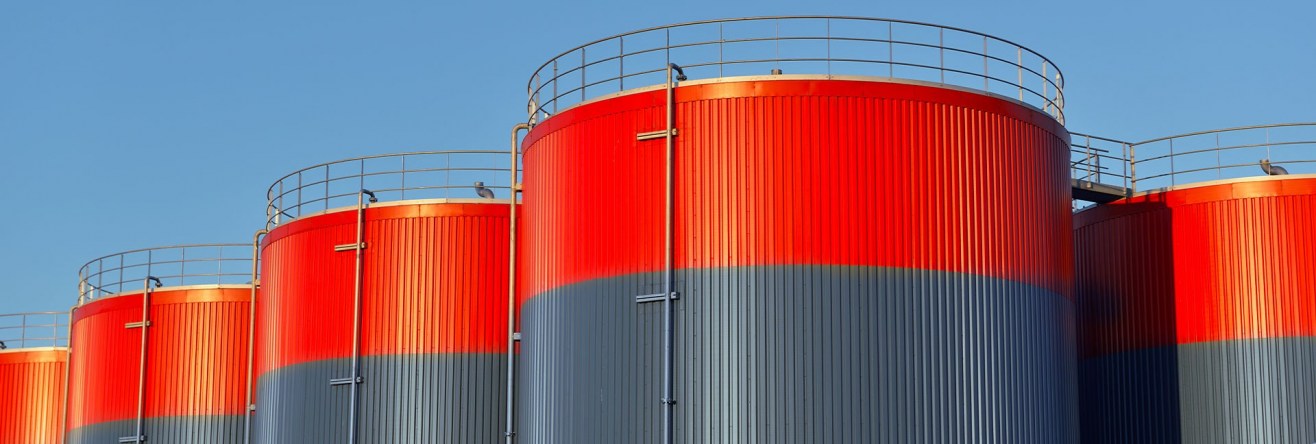
In industry, storage tanks operate under little or no pressure, which distinguishes them from pressure vessels. Storage tanks are usually cylindrical in shape, with a flat bottom and fixed breakable or perpendicular to the floor with a floating roof. There are many environmental regulations for the design and operation of storage tanks, which are usually applied depending on the nature of the liquid contained in them. Aboveground storage tanks differ from underground tanks in the applicable regulatory types. Above ground storage tanks can be used to hold materials such as oil, waste, water, chemicals and other hazardous materials while meeting stringent industry standards and regulations. Particular care should be taken for its safety, since most liquids can spill out, evaporate or leak even through the smallest opening.
This usually involves making an embankment or a set of enclosures around the tank so that any leaks can be safely contained. Some storage tanks require a fixed roof and a floating roof as an extra to the structure or instead. This floating roof rises and falls relative to the liquid level in the tank, reducing the vapor space above the liquid level. Floating roofs are considered a safety requirement and pollution prevention measure for many industries, including oil refining.
Types of Storage Tanks
· Atmospheric :
Atmospheric storage tanks is a container of liquid contained at atmospheric pressure in it.
The main design codes for welded atmospheric tanks are API 650 and API 620. API 653 is used for the analysis of in-service storage tanks.
· High Pressure :
It must be made to withstand pressures such as a liquefied gas such as hydrogen or chlorine, or compressed natural gas.
These tanks can be called cylinders, and since they are pressure vessels, they are sometimes excluded from the class of “tanks”.
· Thermal Storage Tanks :
For seasonal heat energy storage, large insulated and shielded water tanks are used to store the thermal heat of the sun throughout the year. Related technology has become widespread in district heating systems, especially in Denmark. Ice and slush tanks are used for short-term colds for air conditioning, allowing refrigeration equipment to work at night, when electric power is cheaper.
· Milk Tank :
A bulk milk cooling tank in dairy farming is a large storage tank for cooling and keeping milk at a cold temperature until it is received by a milk carrier. Since milk is separated from the breast at about 35 ° C and retains its natural resistance to bacteria after extraction, milk tanks are used for rapid cooling to a storage temperature of about 4 °C to 6 ° C, preventing further growth of microorganisms. It is usually made of stainless steel and is used to store raw milk on the farm in good condition every day.
· Oil Storage Tank :
The process of transferring oils is provided by means of wall pumps or stainless valves. Weighing groups are placed on the foot parts of the boiler. These systems, which determine the product’s amount, provide users convenience.

Industrial Fuel Storage Tank
Industrial fuel storage tanks, also known as petroleum tanks, can hold a variety of liquids. They are commonly used for the storage of both organic and inorganic fluids. In addition to storing flammable liquids, they can also keep vapour. Fuel storage tanks come in a variety of shapes and dimensions.
They are built to hold a range of fuels, vapour, and industrial liquids.
Here are some different types of industrial fuel storage tanks.
Underground fuel tanks (UST)
At least 10% of the stored volume of an underground storage tank (UST) is buried underground. These tanks must be registered with the EPA if they are used to store regulated hazardous items or fuels. These tanks are a good option for anyone wishing to increase their property's size or value.
Materials that are stored in these tanks include
· Fertilisers
· Propane
· Liquefied natural gas
· Petroleum products
· Crude oil
There are numerous sizes and shapes for industrial chemical storage tanks as well. In addition to storing chemicals, industrial chemical storage tanks can be used to do the following:
· Mixing
· Processing
· Static storage
· Transporting finished chemical products
The various types of these tanks include:
Fibreglass tanks
Due to its qualities that prevent corrosion, fibreglass has been employed more and more in piping applications for corrosive fluids since the 1950s. Fibreglass tanks have since been widely used in stock trade wastewater and chemical storage applications.
Polyethene storage
Chemical storage tanks made of polyethene are strong, durable, and inexpensive. Therefore, any chemical that you want to store can be stored in polyethene industrial storage tanks. Additionally, polyethene storage tanks are produced in moulds to eliminate the possibility of human error.
Stainless steel tanks
Stainless steel chemical tanks have evolved into a practical solution for everyone to meet the tremendous storage needs of companies. Various types of stainless steel tanks on the market are renowned for their strength, reliability,
durability, storage capacities, affordability, a wide range of uses, and corrosion resistance. To meet your needs, they are meticulously manufactured and specially tailored.
Oil storage tanks are reservoirs or vessels that temporarily store oil during the various processing stages into oil products of different types or before it is consumed or used. Industrial oil storage tanks are made of various materials depending on their intended use as well as the safety, environmental, and regulatory requirements of other types in the storage area.
From the initial production of crude oil to the distribution and refinement of various petroleum oil products, oil storage tanks of different sizes, forms, materials, and types are utilised.
Nowadays, modern industrial oil storage tanks are made of different materials, including:
· Carbon steel
· Stainless steel
· Reinforced concrete
· Plastic
Here are some of the different types of these tanks:
Bunded tank
Bunded tanks are either surrounded by another tank or a containment dike. The containment dike or outside tank serves as a catch system to stop leaks, spills, or other oil contamination from spreading to the surrounding area.
Floating roof tank
A floating roof that rises or lowers in response to the amount of oil in the tank makes up the floating roof tank. The floating roof is a safety precaution for these tanks to avoid the accumulation of vapour inside the tank.
Single-skin and double-skin tank
A single-skin tank has one layer of plastic or steel, while a double-skin tank has two layers. Tanks with two skins are often known as twin-walled tanks.
Aside from storing a wide range of the following liquids, industrial water and liquid storage tanks are designed for underground burial and pressurised application. The different types of liquids include:
· Kerosene
· Jet A
· Diesel
· Gasoline
· Waste oil
Here are some of the different types of industrial water and liquid storage tanks:
Corrugated steel tanks
The tanks made of corrugated steel for liquid storage are adaptable, strong, affordable, and have a long lifespan. They are created from corrugated steel that has been galvanised.
These tanks are used for the following:
· collecting rainwater
· industrial process water
· fire suppression
Poly tanks
Poly tanks can also be used in homes. These tanks have many uses, such as storing drinking water and collecting rainwater. There are various varieties of poly tanks, including:
· wastewater tanks
· transportable tanks
· aboveground tanks
Fibreglass tanks
Due to their resistance to rust and corrosion, fibreglass liquid storage tanks are long-lasting. The temperature resistance of these tanks is remarkable. They are available with various coatings to provide the best performance for different liquid storage demands, including:
· Rainwater
· Drinking water
· Waste water